Wednesday, June 13, 2012

I Refuse To Be A 90 Lb. Weakling!


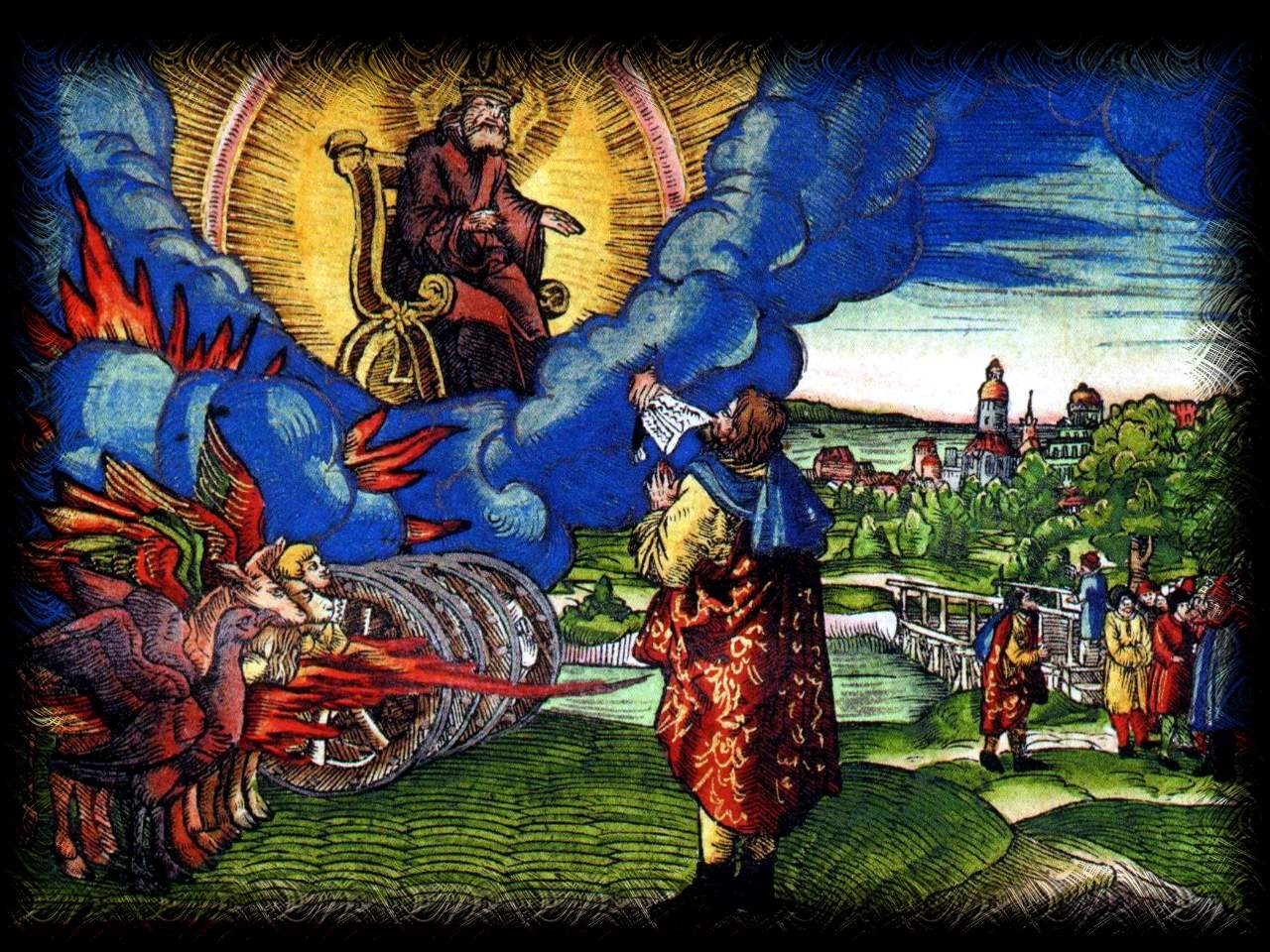
Then the word of the LORD came to me saying,
               "Son of man, when the house of Israel was living in their own land, they defiled it by their ways and their deeds; their way before Me was like the uncleanness of a woman in her impurity. Therefore I poured out My wrath on them for the blood which they had shed on the land, because they had defiled it with their idols. Also I scattered them among the nations and they were dispersed throughout the lands. According to their ways and their deeds I judged them. When they came to the nations where they went, they profaned My holy name, because it was said of them, 'These are the people of the LORD; yet they have come out of His land.' But I had concern for My holy name, which the house of Israel had profaned among the nations where they went. 
                 Therefore say to the house of Israel, 'Thus says the Lord GOD, "It is not for your sake, O house of Israel, that I am about to act, but for My holy name, which you have profaned among the nations where you went. I will vindicate the holiness of My great name which has been profaned among the nations, which you have profaned in their midst. Then the nations will know that I am the LORD," declares the Lord GOD, "when I prove Myself holy among you in their sight. For I will take you from the nations, gather you from all the lands and bring you into your own land. Then I will sprinkle clean water on you, and you will be clean; I will cleanse you from all your filthiness and from all your idols. Moreover, I will give you a new heart and put a new spirit within you; and I will remove the heart of stone from your flesh and give you a heart of flesh. I will put My Spirit within you and cause you to walk in My statutes, and you will be careful to observe My ordinances. You will live in the land that I gave to your forefathers; so you will be My people, and I will be your God.          
                "Moreover, I will save you from all your uncleanness; and I will call for the grain and multiply it, and I will not bring a famine on you. I will multiply the fruit of the tree and the produce of the field, so that you will not receive again the disgrace of famine among the nations. Then you will remember your evil ways and your deeds that were not good, and you will loathe yourselves in your own sight for your iniquities and your abominations. I am not doing this for your sake," declares the Lord GOD, "let it be known to you. Be ashamed and confounded for your ways, O house of Israel!"
            (An ancient king’s proclamation, otherwise known as Ezekiel 36:16-32)

By the waters of Babylon, and Ezekiel, as usual, is having a vision.

God: Son of Man, get your notepad out, I’m making a pronouncement.

Ezekiel: (Under his breath) I hope that’s all…

God: What did you say? 

Ezekiel: You heard what I said.

God: Well, of course I did.  You can’t hide anything from me.6

Ezekiel: So stop pretending otherwise.7 

God: Sorry.  Anyway, you were saying?

Ezekiel: I just want to make sure that you are just going to have me write something.  I’m getting tired of the acrobatics.

God: I’m sure I don’t know what you mean by that…

Ezekiel: Oh, yeah?  What about having me lay on my side for over a year?  You think that’s comfortable?8

God: I’m sure it wasn’t, but there was a good reason…

Ezekiel: And what about not allowing me to mourn for my wife when she died?9

God: Mourning is so messy, anyway…

Ezekiel: And the time you had me eat human shit?

God: That is not true!  You were only going to use it for fuel to cook your food on.10
Ezekiel: You know that parts of what you burn gets on the food when you eat it.  I’m not an idiot.

God: Besides, you never did use the human shit.

Ezekiel: No, cow shit instead!

God: That’s what you cook with every day.

Ezekiel: Still…

God: You sure are cranky today.  Did you get up on the wrong side of the sidewalk? 

Ezekiel: Ha, ha.  You wanted me to write something?

God: I’m not sure, now.  Maybe we should talk another day…

Ezekiel: No, I’m okay.  I’m just tired is all.

God: Tired of what?

Ezekiel: I’m tired of being a mediator between you and this people.  It’s all pointless.  You tell me what to speak to them, and they all come, that’s for certain.  In droves.  Because you make me so entertaining to them—making models and telling of my visions of being pulled up by my hair thousands of miles.  But when they leave, they never listen to your message.  They don’t pay any real attention to me at all.  I’m just providing that day’s entertainment.  But no one actually listens to me.  “Zeke, you’re so funny!  As if Jerusalem will really be destroyed!  You know that God will pull us out of this and take us home!”  Ha!  They weren’t laughing when they did get the news of Jerusalem destroyed.  But they don’t listen any better now that they know that you really spoke to me.  They are in despair and they aren’t doing any more justice now than they ever had.11

God: I know that it’s hard.  I told you from the beginning no one would listen to you.  In the end, though, you aren’t writing for these people, anyway.  You are writing for their children and for millions of others, as yet unborn. 

Ezekiel: So why bother speaking to these idiots?  Why not just write it down for the later generations?  I’d love to just not speak to these idiots anymore.

God: You’ve got to have a context to speak to, and real people to minister to, even if it seems pointless. 

Ezekiel: The world would be so much better without people.

God: Don’t I know it.  But I tried that route, and it just didn’t work.

Ezekiel: Why not?  Why didn’t you just wipe them all out, including Noah?  He was no great shakes of righteousness, either, you know.

God: You never knew him, Zeke.  Sure, he was sometimes a screw up, but you should have seen what I had to work with then.  Noah really was an amazing guy.

Ezekiel: I still think you should have just started over completely.

God: One little problem with that.  I promised that humans would rule the earth.  No matter how crappy they turn out to be, I still put them in charge, and I’ve got to stick to my promises.

Ezekiel: But if a promise is a bad one, why not scrap it?

God: (Chuckling) Zeke, you know that you’d be one of the ones I’d wipe out, right?  If what you said happens?

Ezekiel: Today, I wouldn’t mind that at all.  Well, we’ve got work to do, right?  I’m ready to write and I don’t have anything to tell them today anyway.

God: You know, I was saving this for another day, but you’re in such a state, I think I’ll give this to you today.

Ezekiel: What?

God: You really want to lay into them today?

Ezekiel: You mean like the day I slammed them with the story of the baby girl who grows up to be a harlot?12  That was poetic justice, that was…

God: Well, I doubt anything will compare to that slam, but today, I want you to tell them what I really think of them.

Ezekiel: Maybe I’m not the only one who’s in a bad mood?

God: Oh, no, I’m fine.  But they need to hear this, and I think you’re in the right state to tell them.

Ezekiel: Oooo!  I can’t wait!  So, what comes first?

God: Okay, take this down, “Son of Man…” you know I always start that way.

Ezekiel: Yeah, I know… go on…

God: “When you Israelites were living in the land I gave you, you ruined it by the evils you did.”

Ezekiel:  Got it.  Wow, nothing like starting out with a zinger. 

God: “You worshipped small, green idols made of paper…”

Ezekiel: Huh?  Green?  Papyrus?  

God: You clean it up.  You know how to speak to your people.

Ezekiel: Sure, yeah… go on.

God: “You ignored the cry of the poor and called them criminals.  You had no mercy on the diseased and called them sinners.  You created strongholds to your own pride and declared that you made them for me.  You declared sex to be an entertainment instead of a commitment.  You destroyed the very earth and the species I created.”  You still keeping up?

Ezekiel: Nice.  Go on.

God: “Because of this, I destroyed you off of the land you defiled, in order to grant the land a rest from your evil ways.”

Ezekiel: Give the land a Sabbath from evil?  Cool idea!

God: It’s a program I’m working on.13  We’ll see how it works.  Continue: “So I took you and threw you among the nations, as one might scatter seed on the ground.  But as you were cast among all the peoples of the world, you persisted in your evil deeds, and did not persist.”

Ezekiel: You want me to repeat the vice list again?

God: Up to you.  Style it up.  You know.  “But worst of all, you allowed my name to be defiled among those who did not know me.  You went to the nations, defeated, detested and demoralized.  You did not declare your own responsibility for your punishment, but remained silent.”

Ezekiel: Trust me, these guys aren’t silent, Lord.  You should see me try to shut them up when it’s time to start the service.

God: They’re only silent about what matters.  “The peoples who never knew me now say, ‘Yahweh is a weak god.  He allowed his people to be driven out of the land.  And look at these people’s practices—they are wicked!  They are arrogant and heartless! Yahweh must be as merciless as these!’  My reputation has been destroyed.  I'm as mad as hell.  And I’m not going to take it anymore.”

Ezekiel: Nice lead up.  Getting ready for the punch now?

God: “I will not act for your sake, Israel, because you have proven to not be worthy.  Rather, I am going to make my name holy again.  You have defiled it, but I will hallow my name.  The name of Yahweh will be honored among the nations, and upon you I will declare my holiness.”

Ezekiel: Okay, so what are you going to do, Lord?

God: “First, I will gather you from the nations, and make you a people again.  And I will bring you back to the land and make you a powerful force in the world.”

Ezekiel: Hold on…

God: “Then I will multiply food for you and water and you will never hunger again.  Nor will you ever be scattered among the nations again.  I will make the land like the paradise of Eden, full and plentiful and great. You will have so much, you can provide for yourself, your poor and all the nations around you.”

Ezekiel: Whoa, just wait a minute, God.  This doesn’t make any sense!

God: What don’t you understand?

Ezekiel: Well, perhaps you don’t recall, but you are punishing these people for their sin.  They have done evil, as you said, and they continue to do evil.  And you are going to reward them for it?

God: Of course I won’t.

Ezekiel: But you were just saying…

God: Didn’t you listen?  I told them that I’m not doing this for them.  They don’t deserve it, clearly.  I’m doing this for my own reputation.  You know how I like good press…

Ezekiel: Yes, that’s true.

God: Well, I’m sick and tired of my headlines reading, “Yahweh gets defeated again!” and “Markuk wins over Yahweh!”  or “Money brings you happiness, God not so much”.  This has been terrible.  So I have to do something.

Ezekiel:  Okay, I understand this.  But you certainly don’t want the headlines to read, “Yahweh rewards hypocrisy!”  Or “God hates the poor!”  Because if you reward this people, that’s what you’ll get.

God: Okay, well hang on.  I’m not done yet.  Just wait.

Ezekiel: Alright… (Puts his pen to the papyrus)… go….

God: “I shall prepare you for sacrifice and sprinkle clean water on you.  You shall be cleansed from all of your filthy ways and forgiven for the great evils you have done.  And then I will place within each of you My Spirit of holiness.  This Spirit will make within you what you have never had—pure hearts focused only on loving me.  And in that love you will accomplish the justice, purity and mercy I desire.  You will be my people, not only in word, but in action.  Then all the peoples will see and be astonished at my great power.”

Ezekiel: Well, I have to say, I’m stunned.  This is amazing.  I’ve never heard you speak this way before.
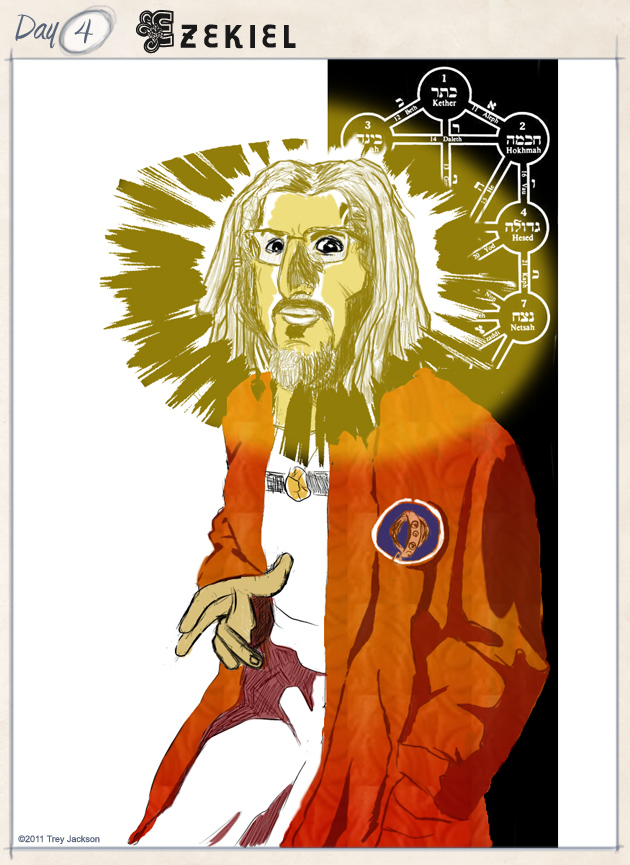
God: I haven’t.  It’s been my plan for a long time, but I’ve never told anyone before.

Ezekiel: Amazing.  So, let me ask you, why didn’t you do this before?  I mean, why not just give them your Spirit of holiness from the beginning?  Then you wouldn’t have had to scatter them.  Would’ve saved you a lot of work.

God: Remember, Zeke, I can only redeem someone when they are a slave.  I can only save someone who needs help.  They never saw themselves as poor and desperate in their own land, with their wealth around them.  They had to cry out to me in their desperation, and then I can give them the great promises.  Of course, I wouldn’t have had to punish them so severely if they’d obeyed me in the first place.  But, as it is, I had to scatter them, give them hunger, poverty, sickness and desperation.  Now they are ready to hear it.  Only in despair can people receive holiness with welcome.  Because only then do they see that mercy and purity actually work.

Ezekiel: (Awed) You are the chess Grandmaster.  What a great strategy.

God: Thanks, Zeke.  That means a lot, coming from you.

Ezekiel: I’m no genius.

God: No.  But you always call it like it is.  That’s what I’ve always liked about you, Zeke.  Okay, have a good service!

Ezekiel: Thanks, Lord!


Footnotes:

6. Psalm 139—God as the greatest intelligence agent of all time.
7. Ever notice that God seems ignorant about some things?  Genesis 3:9; Genesis 18:21.
8. Ezekiel 4:4-5
9. Ezekiel 24:15-24
10. Ezekiel 4:9-17
11. Ezekiel 3:4-9; 8:1.
12. Ezekiel 16.  Start at verse one and keep going until you get grossed out.
13. Leviticus 25:2-13; Jeremiah 25:11-12.

Friday, June 1, 2012

Royalty for Dummies


Jesus was very concerned about promises.  Just as we saw previously, Jesus was deeply concerned about the good reputation of God, and how it is based on truth, and not on the myth of those around him.  Part of this concern is the fact that God had been King for an awful long time—as long as anybody could remember and even longer than that. (In Eternity, no one can hear the tocks ticking.)  And part of what kings do is make promises.  Royal prerogative and responsibility all wrapped up in one.

The method of Royal promises goes like this: People go up to a ruler, any ruler, and says, “We’re tired of sitting in traffic all day!  We need a better way of getting to the market!”  The king considers this and decides Something Must Be Done (Kings all think in pronouncements).  It is at this point that the king says, “I Will Improve Transportation In Our Realm!”  And after this, he works with his advisors and engineers and generally smart people who determine that the best course of action is to build a bridge across the river so everyone doesn’t have to wait for the ferry. Besides, the ferryman smells bad.  So the king pronounces, “We Will Make A Bridge!”  And he allocates resources toward that goal. 

A promise is a precursor to a command.  Any ruler has them—first they make a determination, then they make a promise to fulfill that determination, and then they make commands to see that determination carried out.  A promise is a way of communicating a king’s desire that he intends to fulfill.  It is like a prophecy without all that mucking about with seeing into the future.

If a king has been a king for a while, he builds up a number of promises.  Since God has been king longer than anyone else (even those johnny-come-latelys like Baal and Caesar and the gang leader of the 59th Street Bridge), he has a number more promises than anyone else.  And, like any king, there have been a number of those promises that haven’t been fulfilled.  It isn’t that the king doesn’t want them to be fulfilled or hasn’t planned for them to be fulfilled.  Rather, it is that the time isn’t right, the resources aren’t yet available, the people aren’t yet ready for the promise to be fulfilled.   

And no matter how many promises have been fulfilled (Abraham and Sarah given son in old age?—check.  Israel’s children delivered out of Egypt?—check.   Jehosephat and Hezekiah delivered from armies?—check.  Temple of God rebuilt after exile?—check.)  everyone always looks at the promises that haven’t been fulfilled yet.  Some of the promises are explicit, while others are implicit.  The implicit ones are the ones everyone knows about—whether they have ever heard the kings promise or not.  And if a king breaks a promise, then his reputation is destroyed.  Meaning, he gets bad press.   And God HATES bad press.  Ruins his whole eternity.

But what about the times when God makes a promise that is not kept?  What about prophecies that never take place?  Has that happened?  Well, sure.  God promised, as ruler of the universe, to destroy the Ninevites in Jonah’s time.  God also promised to destroy the children of Israel and begin a new nation with Moses.  These were Pronouncements—a kingly promise, just like others.  Why weren’t they fulfilled?  In fact, the text says that God “repented” of these promises—He changed his mind.  That makes God pretty wishy-washy, doesn’t it? 4

This is one of those times that we get to make a theological division.  This is where someone like Aquinas or J.I. Packer pulls out their penknife and cuts the page, saying “Here the two shall not meet.”  On the one hand, we find in Scripture, God never changes his mind, He never backs off of a promise once made.  And then we have times when God does change his mind.  Here is the divide: God only ever changes his mind of a judgment he pronounced, not of a blessing.  Whenever it talks about God’s faithfulness, His steadfastness to promises, it is about a positive opportunity He will give to a person or people.  But when God pronounces a destruction of a people or a plague, He reserves the right to break that pronouncement—to repent.  And He often uses that option.5

But as King of the Universe, any promises of love, of hope, of deliverance—you can take those to the bank.  They’re as good as gold in a bear market.  They’re as invulnerable as Superman’s chest.

4.  Jonah 3; Exodus 32:9-14

5. Such as Numbers 23:19-20; Lamentations 3:22-23; I Timothy 2:12-13.

Sunday, May 20, 2012

An Early Victory Against the Bourgeois! part 2


 My idea of the Christian life, as a truly sincere religious fanatic, is one of constant challenge and that concept I still hold to.  I wanted to take on the toughest task, to serve the most needy, to tackle the nastiest problems.  To me, that’s just the challenge of Jesus—he’s given me so much, I want to give as much as I can in return.  I was interested in becoming a missionary because that seemed to be the most challenging work in the church.  My friend Diane and I, when we were sixteen, were ready to sign up on a missionary/service ship.  We knew that it would be hard work, but we felt ready for it.  We were told to return after we were eighteen, graduated from high school and generally more mature.  I suppose if there was a list to be a martyr, I would have signed up.  “Whoa!  Ministry opportunity in Mecca!  Cool! I love religious suicide!”

I did volunteer at a Sunday school class for the developmentally disabled.  I went out with the visitation team to give the gospel to unbelievers who came to our church.  I volunteered to go every year to go to Arizona to teach a Vacation Bible School to Navajo kids.  And I volunteered to go to Mexico, to serve and teach there.

            Mexico was the first cross-cultural trip I had ever made (even before my trips to Navajo Arizona).  It was short, only over a Thanksgiving weekend, and it was organized through my youth group (which I barely kept connection with) through an organization called YUGO—Youth Unlimited Gospel Outreach.  We went through many days of orientation, in which we learned what we were to do and a number of songs in Spanish (I still love “Alabare”).  We were split into teams, each of which would go to different villages, pass out tracts in Spanish, do service for a congregation there and offer two services filled with evangelistic songs and sermons.  I suppose the main purpose of us going was the same as a congregation offering a “revival” in the United States.  Hopefully, you have something interesting (like people from another country) that would draw unbelievers into the church and then pray they get converted. This doesn’t really work anymore—if people want to experience a religious show, they can turn on the television and get more entertainment there than in a small congregation. 

            In my team, I was chosen to give one of the sermons, so I had to learn how to speak through an interpreter, and I was given a text to preach.  It was something along the lines of, “How to be Born Again” and it was very similar to the end of the Jack Chick tract I had read when I was twelve (See A Lame Odyssey, Part 2).  It wasn’t really satisfying as a message—having the spiritual maturity of a zygote— but it was a sermon, and I was excited and nervous to be a fourteen year old speaking to adults. 

            On the weekend of our ministry, we were told a bit more about the village we were visiting.  I don’t remember the name, but I clearly remember the circumstances that church was going through.  It was a Pentecostal church (see, I told you it was the Pentecostal’s turn) in the midst of—of course— a Catholic community.  Many of the men of the village would gather together and threaten those who attended the church.  One evening not long before our visit, some of the men were drunk and threw stones at the church while they were having a meeting and broke windows, disrupting the meeting.  I was stunned.  I grew up in Orange County3, California, where I had never heard of such goings on. Sure, in other countries—mission fields, right?— but I had never seen it. 

And these poor people, well, they needed encouragement.  That’s just it.  I looked again at the sermon they gave me.  I can’t preach this drivel to a suffering church!  They don’t need an evangelistic sermon!  They need to hear from God’s word about their circumstances!  As far as I was concerned, well, that was it. 

So I went to my youth leader and told him that I wanted to preach a sermon about persecution the next night.  He thought about it and decided it was a good idea.  So he approached the leadership of YUGO .  The first response he received was completely negative—“No!  We must have Control over what these kids say!  If we let him come up with his own sermon, who knows what he would say!  And besides No One Has Ever Done This Before  Absolutely not!”    (I’ve heard that a lot.  I think that some people have bracelets around their wrists that read NOHEDTB.  Those folks are constantly seeing a triple six on my forehead.)  In my humble, even-handed way, I also determined that I COULD NOT preach the sermon they gave me to these suffering people.  They needed a real teaching.

My poor youth pastor.  Trapped between two stubborn, religious prigs.  He said he would take care of it, and that I needed to focus on writing the sermon if that was going to be done.  He was as good as his word.  The leadership said that I could preach a sermon on persecution, if they saw it ahead of time.  So it was time to focus on writing it.  Outside the church in San Diego we were staying in, I sat on the steps, opened my Bible and prepared.  My bible, at that time, was (warning: prepare yourself for technical lingo here) a New American Standard Open Bible.  What was significant in this is that it had (more technical lingo ahead) a Biblical Cyclopedic Index.  In other words, it is a subject index of the Bible.  This is just what the neophyte preacher needs!  I looked up “persecution” in the index, and found a brief but interesting section on that subject.

It had two sub-topics: “Persecution, caused by;” and “Persecution, Christian’s attitude under.”  After that was a single reference under “Persecution Psalm.”  Looking at this list today, it seems pretty paltry compared to the depth and multitude of texts that deal with persecution, especially in the New Testament.  But for a first time speaker, fundamentally ignorant of Biblical themes, I was pleased with the number of texts.  Plenty for me to work with. 

But this list was disappointing, in that my purpose was to encourage the persecuted believers, while the far majority of texts listed focused on the cause of the persecution.  I think the church in this situation knew the cause of the suffering they were under.  They needed to know what God had in store for them because of their suffering.  Ah, well, beggars can’t be choosers and I only had so many hours to write the sermon—and to sleep!

            On a number of sheets of paper I wrote out my sermon in my printed scribble.  I passed it on to my youth pastor who passed it on to the Powers That Be, who reluctantly approved it.  The next evening I prepared to preach my first sermon at fourteen years old. 

            Today, I wish I had the text of my sermon.  I know it primarily consisted of me explaining the texts I found in the Biblical Cyclopedic Index, as best I could.  My principle then, and it hasn’t changed much since then, is to do little more than to say what the text says, as simply as I can, while opening up the core of the meaning to those listening.   Since my purpose here was to encourage, I suspect that part of my sermon sounded kind of like this:

            “Matthew 5:12—‘Rejoice and be glad for your reward in heaven is great, for so they persecuted the prophets before you.’ Jesus has a special promise to those who are persecuted.  If you are suffering for Jesus, then you can be assured of this: you will gain all the best that heaven has to offer.  Perhaps now things look grim, and you feel like you want to give up.  But in the end, Jesus is preparing for you a reward which you cannot imagine.  Yes, now things look difficult, and the world is stubbornly, fiercely against you, but someday soon Jesus will exchange all of this suffering for a joy that will never be extinguished.  The promise you receive right now from Jesus is greater than the sufferings you are enduring for only a short time.”  Well, something like that, anyway.

            After the service was over, one of the men of the congregation came up to me, shook my hand, smiled and said through the interpreter: “Someday you will be a great preacher.”  I spent many hours trying to decide if that smile was patronizing or sincere.  At the same time, perhaps he was wondering if my sermon was naïve or just handed to me from someone else.  


3. Okay, yes, so you know now.  I grew up in Orange County.  The “OC” (gag).  Let me tell you, growing up there in the 70s and early 80s—sure, it was suburbia, but it wasn’t the hotbed of economic prestige and teen angst/lust.  Look, if you want to make fun of me because I grew up as a suburbanite, fine.  But don’t think that I grew up super-rich or spoiled.  Well, perhaps a little.  More about that later.


An Early Victory Against the Bourgeois! part 1


My religious life began as a Righteous Prig.

When a person becomes a religious fanatic, there are many options open to them.  The most common religious fanatic and the most popular (to non-religious-fanatics) is the Baptized Secular—the one whom God changes their life, only to basically do what they were already doing, only they talk about God (a little) more.  The Converted Secular is similar—God takes them out of who they were, only to have them go to a different kind of life than what they lived before.  This is kind of like a mid-life crisis, except God is much more involved.  The other kinds are less comfortable for others.  There is the Born Again Fanatic, who knows that they have experienced something amazing and life changing from God, but they cannot articulate it in language that anyone can really understand.  There is the Converted Sinner who has changed from one form of anti-social lifestyle to a barely-more-tolerable-religious lifestyle.  The Converted Sinner would be just fine, if they didn’t talk about their experience all the time to everyone they met.  There is also the Entombed Church Member, who is so involved in church life and society that they don’t really know anyone outside of that context.  And, of course, there is the most hated religious fanatic—the Copy Machine.  This person has a specific experience and insists that everyone they meet have exactly that same experience.  The Pentecostal church began this way.1 Frankly, so did a lot of denominations.  But today we get to pick on the Pentecostals. 

            I, however, was none of these.  I belonged to the second most hated order of religious fanatic—the holier-than-thou, looking down the nose, would-that-everyone-were-as-good-as-I, Righteous Prig.  This is a pretty common type of religious fanatic, and I believe that it is a genetic defect, caused perhaps by a bent chromosome or a group of mitochondria that perhaps partied too much.  As with most genetic maladies, it requires a specific environment to be triggered, and it seems that for many God’s grace on them triggers the Righteous Prig malady.  The most amazing part of this malady is to assume that everyone should be at the moral place the Righteous Prig is at.  “Yes, it took me 40 years to be able to accept this ethical sainthood from God— but you should have learned it before I!”  It is well and good that God is more patient with us than Righteous Prigs are or else the earth would be filled with lightning scars, and long since depopulated.  In other words, it’s a good thing I’m not God.

            My form of Prigishness was quieter than others’, and so I judged others in silence (mostly).  This allowed me to keep what few friends I had.  But it made it difficult to make new ones.  I attended church regularly after my conversion—forcing my parents to drive me every Sunday—but I never attended the youth group.  I wasn’t interested in hanging with those my own age, for they weren’t “serious” enough.  By this I meant that they didn’t realize that the Christian life wasn’t a bunch of fun and games (you know—joyful activities, because joy is obviously not a Christian virtue).  I attended the adult services, and adult Bible studies filled with Scripture memorization and difficult theological concepts such as dispensationalism.2

Story continues in An Early Victory Against the Bourgeois! Part 2...


  1. I love the Pentecostal church, and have learned much from them.  But I don’t understand why the traditional Pentecostals must force tongues down everyone’s throat—so to speak.  The book of Acts is great, but some analysis of I Corinthians 12-14 (perhaps one not dissimilar to Gordon Fee’s) is certainly in order. Gordon Fee, the premier Pentecostal biblical scholar, actually has an excellent commentary on I Corinthians, but the exegetical analysis is rarely listened to in comparison with popular theology.
  2. Dispensationalism is, like most theologies (such as Marxism) a good idea taken too far. The basic idea is that God works in different ways at different times and that one can draw a line at particular point in time and say, “Everything is different after this.”  Biblically, this can only be said about the cross, and even there, many of the implications of dispensationalism  don’t hold.  Dispensationalism is often associated with a form of fundamentalism, and historically it was, but it doesn’t have to be.


Wednesday, May 9, 2012

Anawimless Society: Obtaining God's Blessing


A depiction of cross references in the Bible

In our blog, up to this point, we have travelled a wide breadth of Scripture.  

At the very beginning, creation itself, we found that God chose humanity, not because of their glory, but because of their weakness, compared to the other “gods” He had as options to rule the world.  We also looked at how God chose the weak and helpless to uphold so that He could be seen as the One with strength.  God’s help, we saw in Psalm 146 is for all the poor, to grant them food and to deliver them from oppression.  And from Samuel’s mother, Hannah, we learned how it is God’s plan to raise the poor from the dust to no smaller place than the top of the heap of humanity.  And, finally, we saw how Jesus actually chose the poor to make up his school, as an indicator of who would enter into God’s kingdom.  The anawim are the apple of God’s eye, the focus of His salvation. 

What Jesus didn't say
Yet we look at our churches today, and they don’t reflect God’s vision in this way.  In many ways, we indicate that the poor are separated from God’s people, not the heart of it. In many churches, they see a “spirit of poverty” as a form of oppression.  Of course, poverty is a limitation, a difficulty, but it is just as much a symbol of blessing as it is a kind of oppression.  In testimonies and stories of the church, we talk about poverty as something we used to have, but have been delivered from.  This implies that God’s true people aren’t people burdened by poverty. It has been an assumption and often a bold theological point that God’s blessing and sign of approval is to be wealthy or at least living a middle class lifestyle.  Yet Jesus declared the poor to be blessed and to be God’s people. 

The church is a culture as well as a spiritual people.  And the culture of 99 percent of American churches is the culture of the middle class who have the next level in the social order as their goal.  Our church leaders usually want to fill their churches with suburbanites instead of single moms with drug babies.

The poorest of the poor are not found to darken our door—the homeless, mentally ill, panhandlers, illegal immigrants, itinerant farm workers, sufferers from AIDS.  And this is not because we do not welcome them.  It is because they see the culture of the church as being different from the culture that they live with.  To be a part of the church, for them is to be converted, not to a spiritual reality, but a social and ethical system which is unknown to them.

When our churches do talk about the poor, it is about ministry ‘to’ the poor, not being ‘of’ the poor.  We are seen as the people who are wealthy who need to assist, help, save, deliver, feed, clothe or house the poor.  Even in this, the poor are on the outside of the church and the church is “reaching out” to them.  Why?  Because in our hearts, we know that we don’t commune with the poor.  They aren’t a part of us. 

The religion that began as a gathering of the poor, now finds itself locked out of the blessing God offers to the poor.  We are outside of many of the promises of Jesus because, frankly, we don’t need them.  We pray the Lord’s prayer regularly, but we don’t really mean that we want God’s kingdom to come, because that would mean that the economics and society that our current salvation is found would have to be set aside.  We don’t really need to pray for our daily bread because we have our refrigerators full of this month’s food.  And, often, we don’t see God as our deliverer, because we have so many resources at our fingertips.

We need to seriously consider the option that our churches feel empty of the Spirit, seem devoid of life, have pews filled with air more than bodies because we have stopped taking God seriously as a means of salvation.  If we refuse poverty, how will God gain the glory of delivering the poor?  If we no longer are the needy, then how will God grant our needs?  Yes, we are responsible, we are strong, we care for those we have to take of.  But will God be found among a people who speak His glory, but never reach out for it, never live it out in their lives?

Wednesday, May 2, 2012

Celebrity News


Good day, dear readers!  

Marcella Glibb here, again giving you all the news fit to be tied!  Today, your faithful reporter of the stars bundles up in loose, blandly colored robes and a head scarf to enter into the country of the tightly-wound.  Yes, that’s right, Marcella Glibb will undergo any sacrifice, even her most dear sense of fashion in order to speak to the up and coming celebrities that you need to know. 

 Today, she travels to backwater Galilee to speak face-to-face with Yeshua bin Yosef, AKA Jesus!  The star of the Jews, the new radical professor is also getting to be well known among the popular jet sets, so lets talk to him and find out what he is really about!

            Your overly-covered reporter enters a medium sized home, packed full of lounging, dirty men and women.  Jesus is supposed to be running a school, but these students of his seem more like they have just spent a month in a rag-tag caravan.  They are all exhausted, filthy and the smell—well, it is good your well-prepared reporter keeps some sweet smelling cloths with her!

            But there, on the other side of the room is a man who is almost radiant!  Young, short curly hair, beardless, skin the color of camel’s hair, he seemed to positively glow with charisma.  What some women wouldn’t do to spend some time alone with him!  But your reporter was all business, ready to discuss with him what you most want to know.

            So, is there a Mrs. Jesus around?
            Foxes have holes and the birds of the air have nests, but the Son of Man has no where to lay his head.25

(Oh, how cute, he speaks in aphorisms!)  So no home life for you?  I suppose that’s why your students all look so worn, because they have to follow you around.
            If anyone would come after me, he must take up his cross and follow me.26
           
I suppose that wouldn’t be an easy school to be a part of, travelling cross country with you.  What kind of tuition do you charge on top of all that?
            Freely they have received, so they must freely give.27
           
Tuition free!  Hear that all of you potential students?  The best deal in town!  But still, this isn’t an easy school. Why do you make your disciple’s life so difficult? 
            We must go to other places, for the Son of Man came to preach there also.28
           
Ah, so you are fated to travel around.  So you have your lecture circuit in addition to your private school?  That must keep you busy!  But don’t you think that it is difficult on your private students to travel around?  After all, it makes them more like paupers than educated men.
            Blessed are the poor for theirs is the kingdom of God.29
           
So you purpose to make your students poor?
            No one can be my disciple who does not give up their possessions.30

So are you giving rich kids the experience of being poor, or are you actively seeking the poor to be your students?
            It is written, “The Spirit of the Lord is upon me because he has anointed me to preach the gospel to the poor, to proclaim release to the prisoners and recovery of sight to the blind, to set free those who are oppressed.”31
           
A school for the poor!  Fascinating!  You are so unique Jesus!  And what sacrifices you have made, I am sure.  I can tell by your speech, however, that you are not a peasant, nor, I think, have you lost all your wits in living as a poor man.  Do you really enjoy the company of the poor?
            There was a banker who had two women who were both indebted to him.  He called on in, and forgave her debt of a thousand dollars.  The other he forgave a debt of ten thousand.  Which do you think loved him the more?32
           
Ah, I see your point.  So you really do enjoy the company of your disciples?  Is this why there are some women who follow you around as well?  I understand there are some here who have special skills, as well.  Do you ever give private lessons?
            There are eunuchs who are born that way, other eunuchs are made that way by men and some eunuchs make themselves eunuchs for the sake of the kingdom of God.33
           
Thank you for making your point so… graphically.  I’m sure my readers will never forget it.  So, suppose I or some of my readers wanted to be a student of yours, what will they learn?
            Life is more than food or clothing.  Consider the birds of the air: they do not sow or reap and yet their Father in heaven provides all food or them.  Consider the lilies of the field: they do not spin or toil but even Solomon was never dressed as well as they.  Don’t worry about what you will eat or drink, but seek God’s kingdom and all these things will be granted to you as well.  Instead, sell your possessions and give to the poor, and you will have treasure in heaven, which no one can steal away from you.34
           
That’s beautiful, Jesus.  Just beautiful—although I doubt that many of your reporter’s diligent readers will be ready to give up their gorgeous houses and lovingly crafted robes to follow you around.  Do you have any word for them?
            Beware and be wary of every kind of greed—for even when one has an abundance does their life consist of possessions.35
           
Ahem.... Well, I’m sure we’ll all take that into account.

            Let’s all say “ta-ta” to our aesthetic professor of Galilee!  Honestly, your reporter is ready to check out Cardineus’ latest fashion trends after being bathed in grime and poverty!

25. Luke 9:58
26. Mark 10:34
27. Matthew 10:8
28. Mark 1:38
29. Luke 6:20
30. Luke 14:33
31. Luke 4:18
32. Luke 7: 41-42.  SKV dynamic translation.  The “SKV” is my own version that takes some liberties, but keeping the same idea of the Greek.  I hope.
33. Matthew 19:12
34. Luke 12:24, 27, 31, 33
35. Luke 12:15